


© 2025 Baymed Limited. All rights reserved.
Dec 29, 2025

Share at
The Catholic prayer for the dead is one of the most profound expressions of love, hope, and faith within the Catholic tradition. It reflects the Church’s deep belief in eternal life, the communion of saints, and the mercy of God that extends beyond death. For Catholics, praying for the dead is not merely a custom—it is a spiritual act rooted in Scripture, Tradition, and centuries of lived faith.
RELATED READING: https://www.themanna.app/resources/sports-verses-from-the-bible-a-christian-athletes-guide-to-strength-endurance-and-faith
In a world that often avoids conversations about death, Catholicism offers a compassionate and hope-filled perspective: death is not the end. Through prayer, the living remain united with the dead, asking God to grant them rest, purification, and eternal peace.
This article explores the theology, history, and practice of Catholic prayer for the dead, including traditional prayers, biblical foundations, the role of Purgatory, All Souls’ Day, indulgences, and how modern tools—such as daily prayer apps like Manna—the daily bible study app, can support a consistent prayer life centered on remembrance and hope.
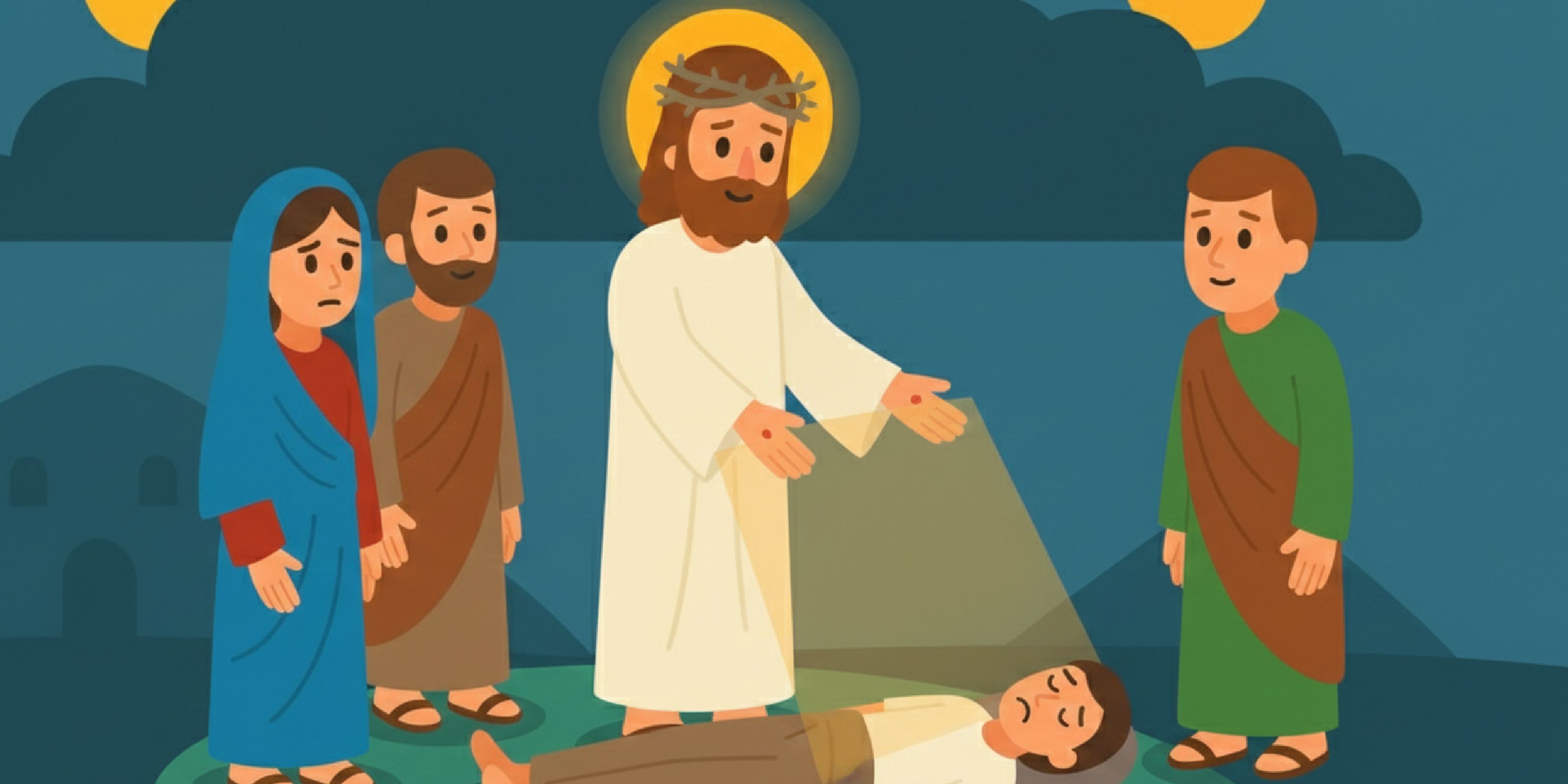
A Catholic prayer for the dead is any prayer offered to God on behalf of those who have died, asking that their sins be forgiven, their souls be purified, and that they may enter fully into the joy of Heaven.
Unlike prayers to saints, prayers for the dead are directed to God alone. The Church teaches that these prayers can assist the souls of the departed, especially those in Purgatory, as they undergo purification before entering the presence of God.
At its heart, Catholic prayer for the dead expresses three core beliefs:
God’s mercy continues after death
The living and the dead remain spiritually united
Prayer has real spiritual power
Although some Christians question the practice, Catholic prayer for the dead is firmly rooted in Scripture.
Thus he made atonement for the dead that they might be absolved from their sin.
This passage is one of the clearest biblical references supporting prayer for the dead. Judas Maccabeus orders prayers and sacrifices for fallen soldiers, demonstrating a belief in purification after death and the effectiveness of intercessory prayer.
Whoever speaks against the Holy Spirit will not be forgiven, either in this age or in the age to come.
This verse implies that forgiveness can occur in the next life, aligning with Catholic teaching on Purgatory and prayer for souls after death.
Otherwise, what will people do who are baptized for the dead?
While the verse is debated, it reflects an early Christian concern for the spiritual state of the deceased.
St. Paul prays for Onesiphorus, who many scholars believe had already died, asking the Lord to grant him mercy “on that Day.
Together, these passages form a scriptural foundation for the Catholic prayer for the dead, reinforcing that this practice is neither medieval nor invented—but biblical.
One of the most important doctrines behind Catholic prayer for the dead is the Communion of Saints, which includes:
The Church Militant (the living)
The Church Suffering (souls in Purgatory)
The Church Triumphant (saints in Heaven)
These three states of the Church remain united in Christ. When Catholics pray for the dead, they are exercising love within this communion.
Purgatory is not a second chance or a lesser Hell. Instead, it is a state of purification for those who die in God’s grace but still need cleansing from the effects of sin.
Catholic prayer for the dead is especially directed toward souls in Purgatory, helping them move closer to eternal union with God.
The Catechism of the Catholic Church (CCC 1032) states:
The Church also commends almsgiving, indulgences, and works of penance undertaken on behalf of the dead.
Catholics pray for the dead for several deeply spiritual reasons:
Prayer is an act of love, and love transcends death. Praying for deceased loved ones keeps that bond alive in Christ.
Catholic prayer for the dead expresses confidence that God’s mercy can heal, forgive, and restore—even beyond this life.
Every prayer for the dead points toward the resurrection of the body and life everlasting.
Praying for the dead is considered a spiritual work of mercy, placing it at the heart of Catholic moral life.
One of the most well-known Catholic prayers for the dead:
Eternal rest grant unto them, O Lord,
and let perpetual light shine upon them.
May the souls of the faithful departed,
through the mercy of God, rest in peace. Amen.
This prayer is often recited during funerals, at gravesides, and during November, the month dedicated to the Holy Souls.
O God, who have commanded us to honor father and mother,
have mercy in Your kindness on the soul of my loved one.
Forgive their sins, and grant that I may one day be united
with them in the joy of eternal life.
Through Christ our Lord. Amen.
Merciful Father,
I offer You the precious Blood of Your Divine Son, Jesus,
in union with the Masses said throughout the world today,
for all the holy souls in Purgatory,
for sinners everywhere,
and for those who will die this day. Amen.
Out of the depths I cry to you, O Lord;
Lord, hear my voice…
This psalm is frequently used as a Catholic prayer for the dead, expressing trust in God’s redemption.
The Holy Mass is considered the most powerful Catholic prayer for the dead. Offering Mass intentions for deceased loved ones has been a long-standing tradition in the Church.
Why is the Mass so important?
It re-presents Christ’s sacrifice
It applies the fruits of redemption
It unites Heaven and Earth
For this reason, Catholics often request Masses on anniversaries of death or during All Souls’ Day.
All Souls’ Day is entirely dedicated to praying for the dead. Churches around the world offer special liturgies, processions, and indulgenced prayers.
Throughout November, Catholics are encouraged to intensify their Catholic prayer for the dead, especially by:
Visiting cemeteries
Praying the Rosary for the deceased
Gaining indulgences for souls in Purgatory
An indulgence is the remission of temporal punishment due to sin. The Church teaches that indulgences can be applied to souls in Purgatory.
Common indulgenced practices include:
Praying for the dead in a cemetery (Nov 1–8)
Reciting the Rosary
Reading Scripture devoutly
These acts, when combined with confession, Communion, and prayer for the Pope, become powerful forms of Catholic prayer for the dead.
Catholic prayer for the dead is not limited to funerals or special dates. It can be integrated into everyday spiritual life.
Simple daily practices include:
Adding deceased loved ones to morning prayers
Saying the Eternal Rest prayer before sleep
Offering daily sacrifices for the Holy Souls
Reading Scripture focused on hope and resurrection
Many Catholics today use structured devotionals or Scripture-based prayer tools to stay consistent. For example, Bible-centered apps like Manna help users engage with daily verses, guided reflections, and prayer reminders—making it easier to remember intentions, including prayers for the dead, as part of a daily faith routine.
Praying for the dead is also a powerful way to process grief.
Rather than suppressing sorrow, Catholic prayer:
Gives language to loss
Offers hope beyond death
Transforms grief into intercession
For many, praying for a loved one’s soul becomes a path toward healing, trust, and peace.
No, but it is strongly encouraged as a spiritual work of mercy.
Yes. Catholics may pray for all the deceased, trusting in God’s universal mercy.
Prayer does not override God’s justice but cooperates with His mercy.
Souls in Heaven no longer need prayers, but prayers offered for them become acts of praise and thanksgiving.
In today’s fast-paced world, remembering the dead can easily be neglected. Yet the need remains just as urgent.
Modern Catholic life increasingly blends tradition with accessible tools—daily prayer schedules, digital devotionals, and Scripture-based reflections. Apps like Manna, which focus on daily Bible engagement and prayer habits, can quietly support Catholics in keeping remembrance of the dead integrated into everyday spiritual practice without distraction or pressure.
The goal remains unchanged: to pray, to hope, and to trust in God’s mercy.
The Catholic prayer for the dead is a timeless expression of faith in eternal life, divine mercy, and the unbreakable bonds of love in Christ. It unites generations, consoles the grieving, and reminds the faithful that death is not the final word.
Through Scripture, Tradition, the Mass, indulgences, and daily prayer, Catholics continue to fulfill their spiritual duty to remember the faithful departed. Whether whispered at a graveside, spoken during Mass, or included quietly in daily prayer routines, every prayer offered for the dead becomes an act of hope.
In a Church that spans Heaven and Earth, no soul is forgotten—and no prayer is ever wasted.


